Vet-Informed Calm Support for Dogs with Separation Anxiety
Separation anxiety is not bad behavior — it’s a stress response. Many veterinarians recommend gentle, non-invasive calming tools to help dogs feel safer when left alone.
Below you’ll find carefully selected calming tools that support comfort, focus, and emotional balance — without medication.
See recommended calming tools ↓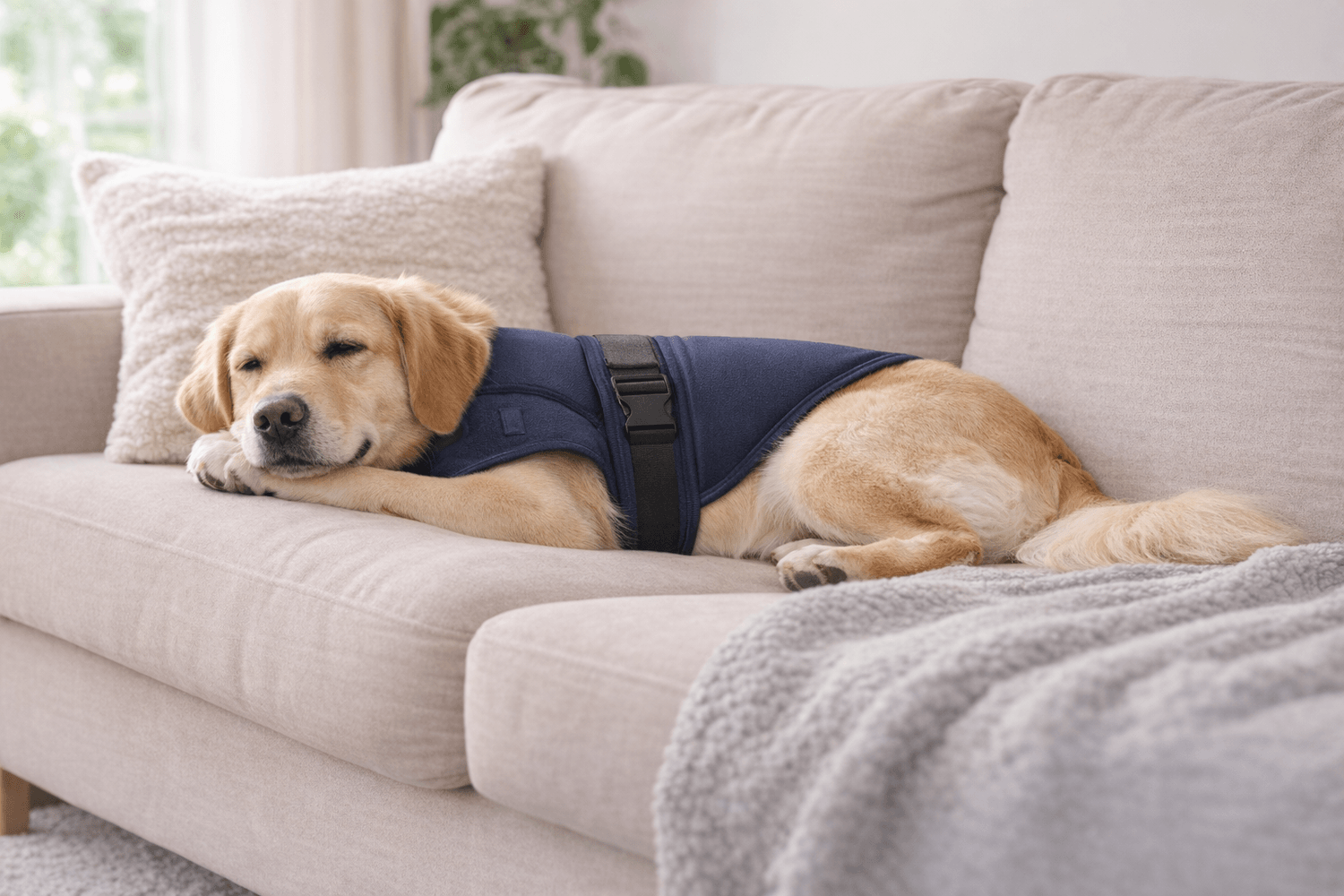
Why veterinarians often recommend calming tools
Separation anxiety activates a dog’s stress response. Instead of correcting behavior, professionals often focus on reducing the feeling of threat. That’s where calming tools play an important role.
Physical reassurance
Gentle pressure and tactile feedback can help dogs feel grounded during moments of stress.
Reduced overstimulation
Calming tools can limit sensory overload when dogs are alone in unfamiliar or quiet environments.
Natural calming behaviors
Certain tools encourage behaviors like slow breathing, licking, and focus — all linked to relaxation.
Non-invasive support
These tools do not rely on medication and are often used alongside routine and training.
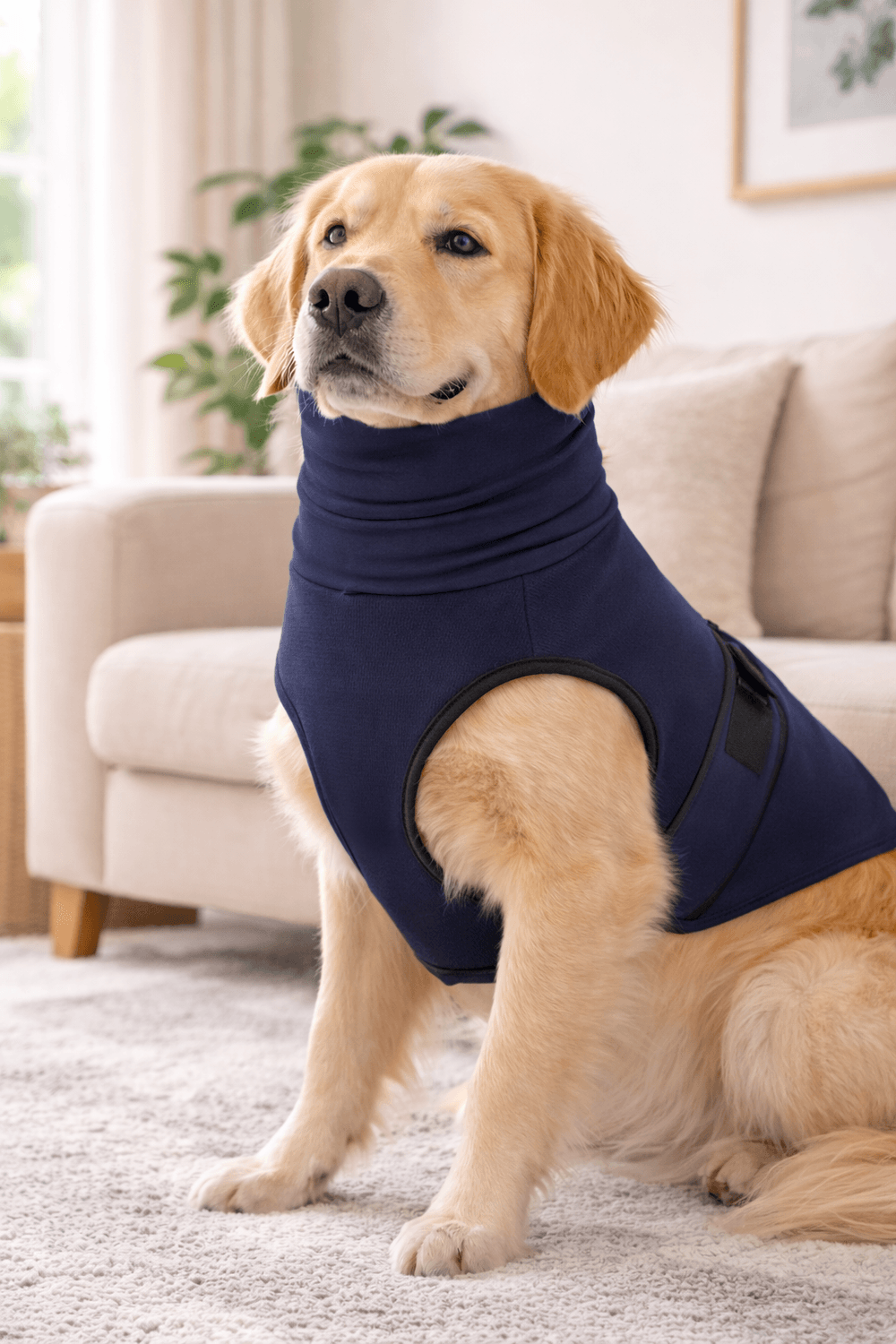
Calming Anxiety Vest
Calming vests apply gentle, consistent pressure around the dog’s torso. This technique is commonly used by professionals to help dogs feel more secure during stressful moments.
- Non-invasive and drug-free
- Easy to use during departure routines
- Often recommended by veterinarians and trainers
- Suitable for daily calm support
Why this calming vest was selected
Not all calming vests are created equal. This option was selected based on criteria commonly used by veterinarians and trainers when recommending supportive tools for anxious dogs.
Safety & comfort
Designed to be worn comfortably without restricting movement or causing irritation.
Ease of use
Simple to put on and remove, making it practical for daily routines and departures.
Non-invasive support
Provides calming pressure without medication, electronics, or behavioral punishment.
Daily compatibility
Suitable for repeated use as part of a consistent, calm-support routine.
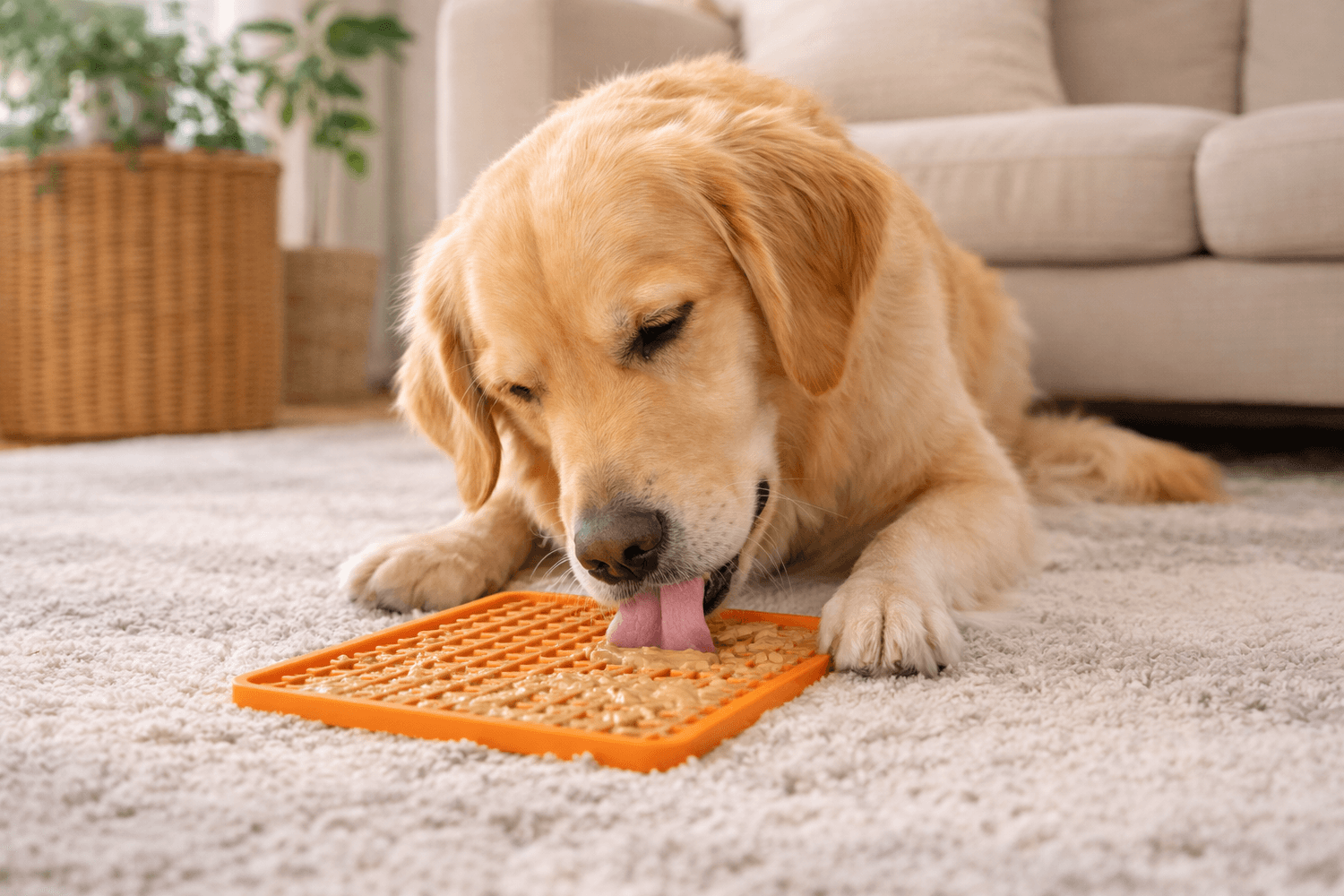
Calming Lick Mat
Lick mats promote slow, repetitive licking — a natural behavior associated with relaxation and focus in dogs. Many trainers recommend them during departure routines.
- Encourages calm focus during stressful moments
- Helps redirect anxious energy
- Easy to use with spreads or soft foods
- Simple to clean and reuse
Using both tools together for layered calm support
Many veterinarians and trainers suggest a layered approach when supporting dogs with separation anxiety. Combining physical reassurance with calming focus tools can help address stress from more than one angle.
Step 1: Physical reassurance
The calming vest provides gentle, consistent pressure that may help dogs feel grounded during departures.
Step 2: Calm focus & distraction
The lick mat encourages slow, repetitive licking — a behavior often associated with relaxation and focus.
Every dog is different. Some dogs respond well to a single tool, while others benefit from combining multiple forms of calm support as part of a consistent routine.
A calm, ethical approach to supporting your dog
PawtnerCare focuses on education and gentle support. Calming tools are not medical treatments and are not intended to replace professional veterinary or behavioral care.
If your dog’s anxiety is severe, persistent, or worsening, we encourage you to consult a qualified veterinarian or canine behavior specialist.
Educational content only. Results vary by dog, routine, and environment.