
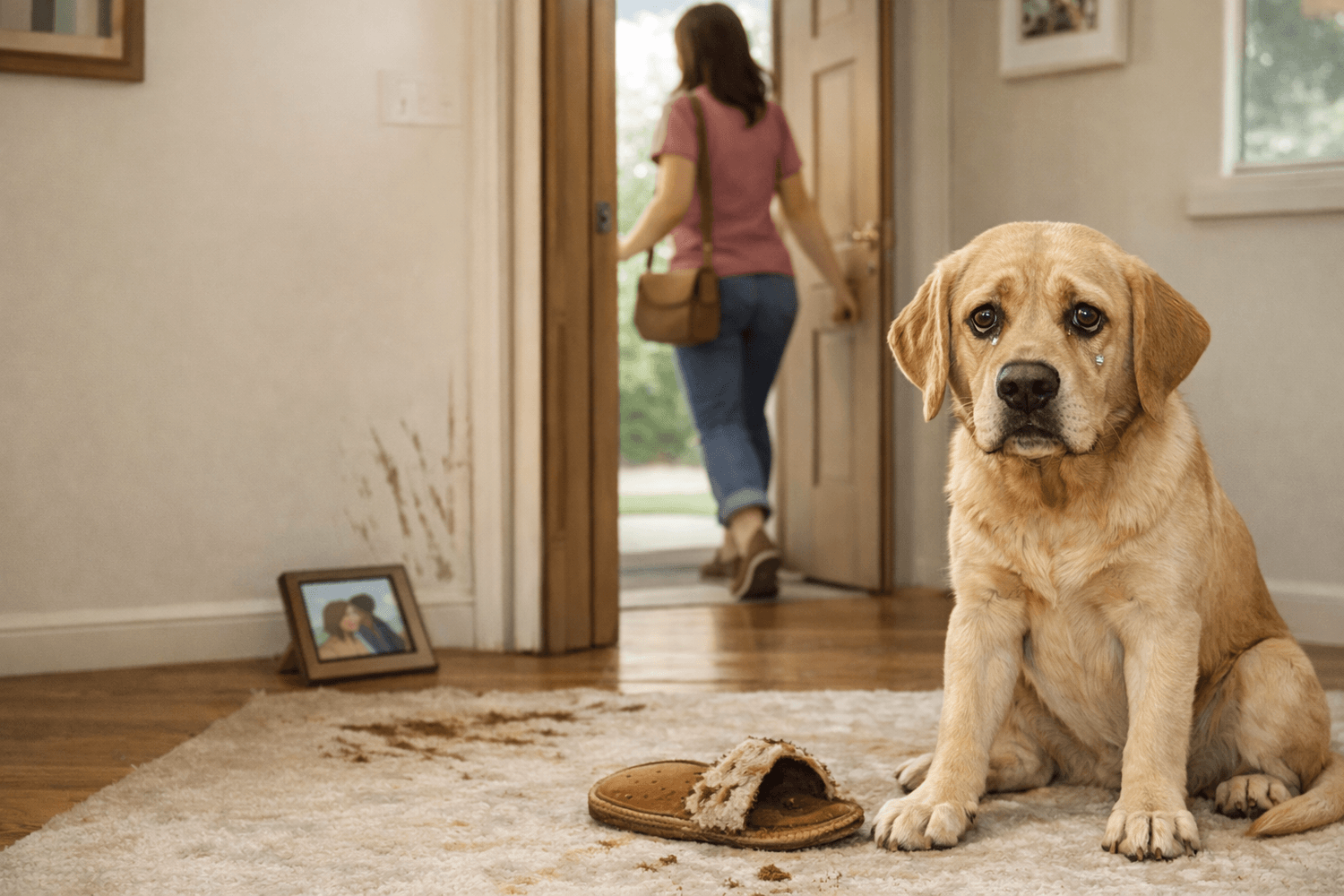
Does your dog panic when you leave the house?
Excessive barking, destruction, crying, or anxiety when left alone are often signs of separation anxiety — and it’s more common than most dog owners realize.
The good news? With the right understanding and gentle support, many dogs can learn to feel calmer, safer, and more relaxed — even when you’re not home.
Get the free guide to calm your dog →Common signs of separation anxiety in dogs
These behaviors are often misunderstood as stubbornness or bad habits — but in many cases, they are signs of emotional distress.
Excessive barking or whining
Persistent vocalization when left alone, sometimes lasting for hours.
Destructive behavior
Chewing furniture, scratching doors, or damaging objects near exits.
Panic or agitation
Pacing, trembling, drooling, or visible stress before and after you leave.
Anxiety around departures
Becoming distressed as soon as routines signal you’re about to leave.
Common mistakes dog owners make (without realizing it)
When a dog shows signs of separation anxiety, most owners act with love and good intentions. Unfortunately, some very common reactions can actually make anxiety worse — even though they seem logical at first.
Punishing or scolding the behavior
Yelling or punishing after coming home does not teach calm behavior. It often increases fear, because your dog connects your return with stress — not with the earlier behavior.
Making departures emotional or dramatic
Long goodbyes, repeated reassurance, or anxious body language can signal that something bad is about to happen. This builds anticipation instead of calm.
Assuming the dog will “grow out of it”
In many cases, separation anxiety does not disappear on its own. Without support, the stress response can become stronger and more frequent.
Relying only on exercise or obedience training
Exercise and training are helpful, but anxiety is emotional. A tired dog can still feel unsafe when left alone if emotional needs aren’t addressed.
Important to remember:
Separation anxiety is not a discipline problem. It’s an emotional response to feeling unsafe.
Once owners shift their approach from control to support, real progress becomes possible.
The good news is that these mistakes are common — and reversible. Learn how to support your dog the right way →
How to help your dog feel calmer when you’re away
Helping a dog with separation anxiety is not about forcing independence. It’s about creating predictability, emotional safety, and calm signals that your dog can trust — even when you’re not home.
Create predictable routines
Dogs feel safer when their environment is predictable. Leaving and returning around similar routines helps reduce uncertainty and lowers anxiety over time.
Support emotional comfort, not just exercise
Physical activity helps, but anxiety is emotional. Calm cues, familiar scents, and mental reassurance are often just as important as a long walk.
Make alone time feel safe
Leaving comforting items, background noise, or calming routines can help your dog associate being alone with safety instead of fear.
Be patient and consistent
Progress with anxiety is rarely instant. Small, consistent improvements over time are a strong sign that your dog is learning to cope more calmly.
Important perspective:
Separation anxiety is not something you “fix” overnight.
It’s something you help your dog work through — gradually, calmly,
and with the right kind of support.
Many of these steps become easier when you follow a clear structure. See the free step-by-step guide →
A calmer approach can make a real difference
Many dog owners feel frustrated, overwhelmed, or even guilty when their dog struggles with being alone. The truth is, separation anxiety is not a failure — it’s a signal that your dog needs guidance, not control.
When dogs are supported with calm routines, clear signals, and gradual independence, many begin to relax naturally over time. This doesn’t require harsh training or punishment — it requires understanding how dogs process stress and safety.
That’s why structured guidance can be helpful. Having a simple plan makes it easier to stay consistent, notice progress, and avoid the common mistakes that increase anxiety.
Some owners prefer to have these steps clearly written down,
so they can follow them calmly and at their own pace.
Download a free, step-by-step guide →
Want a simple plan you can follow calmly?
Some dog owners feel more confident when they have clear steps written down — especially during moments when their dog feels anxious or overwhelmed.
- ✔ Calm routines that support emotional safety
- ✔ Common mistakes that can increase anxiety
- ✔ Gentle strategies many owners use at home
- ✔ A simple structure you can follow at your own pace
This guide is optional and meant to support your journey — you’re always in control.
When extra support can be helpful
In addition to routines and emotional guidance, some dog owners choose to use practical calming tools to support their dog’s comfort when they’re away. These tools are not a “quick fix” — but they can make the process easier when used thoughtfully.
Many calming products focus on helping dogs feel safer through familiar sensations, gentle stimulation, or environmental comfort. When chosen carefully, these tools are often used alongside routines recommended by trainers and veterinarians.
The key is understanding why a product is used, how it supports emotional safety, and when it makes sense for your dog’s specific needs.
Educational comparison based on common use cases — not medical advice.
Frequently Asked Questions About Dog Separation Anxiety
These are some of the most common questions dog owners ask when dealing with separation anxiety. Clear answers can help you make calm, informed decisions for your dog.
Can separation anxiety be cured?
Separation anxiety can usually be improved significantly, but it’s best viewed as a condition that needs ongoing support rather than a quick cure. With patience, routine, and the right tools, many dogs learn to feel calmer and more secure when left alone.
How long does it take to see improvement?
Every dog is different. Some dogs show improvement within days, while others may need a few weeks of consistent support. Progress often comes gradually as your dog builds confidence.
Should I crate my dog if they have separation anxiety?
Crating can help some dogs, but it can increase stress for others. If your dog panics in a crate, forcing confinement may worsen anxiety. It’s important to observe how your dog reacts and choose what feels safest for them.
Is separation anxiety my fault as an owner?
No. Separation anxiety can develop for many reasons, including changes in routine, past experiences, or personality traits. Loving your dog does not cause anxiety — and supportive steps can help them feel better.
Are calming support tools safe for dogs?
Most calming support tools are designed to be gentle and non-invasive. Always follow usage instructions and choose options that align with your dog’s size, temperament, and needs.
You’re Not Alone — And Your Dog Can Feel Better
Dealing with separation anxiety can feel overwhelming, especially when you care deeply about your dog’s well-being. The most important thing to remember is that anxiety is not a failure — it’s a signal that your dog needs reassurance and support.
By understanding the signs, avoiding common mistakes, and choosing calm, supportive approaches, many dogs learn to feel safer and more relaxed when left alone. Progress may be gradual, but consistency makes a real difference.
There is no “perfect” solution — only the one that feels right for you and your dog. Supportive tools, healthy routines, and patience often work best together.
If you’d like to explore calming options that many dog owners consider as part of their routine, you can learn more below. Take your time, read the details, and decide what feels right for your situation.
This page is for educational purposes only. Always consider your dog’s individual needs and consult a professional if anxiety symptoms are severe.